How Often Should You Chemical Wash Your Aircond?
Learn the recommended chemical wash frequency for your aircond based on usage, environment, and unit type. Expert guide from AC Service Pro.
[AddInfographic]
One of the most common questions we get from customers is: “How often should I chemical wash my aircond?”
You know that sticky, humid feeling when you walk out of a cool room into the KL afternoon heat? That same moisture is constantly condensing inside your air conditioner. From what I’ve seen servicing thousands of units in Kepong, that moisture turns dust into a thick “jelly” that blocks airflow faster than most people realize.
This buildup isn’t just gross; it forces your unit to work 25% harder to cool the same room.
We are going to break down the exact maintenance schedule you need based on your specific usage. Then we will look at the real math on how much money a simple wash actually saves you on your TNB bill.
Quick Answer: Every 6-12 Months
For most residential airconds in Malaysia, we recommend a chemical wash every 6-12 months.
This isn’t a random guess. The high humidity in Kuala Lumpur (often exceeding 80%) creates the perfect breeding ground for mold like Aspergillus inside your cooling coils.
We find that the exact frequency depends on five specific variables:
- Daily Usage: Hours of operation per day.
- Occupancy: Number of people and presence of pets.
- Location: Proximity to main roads (like Jalan Kepong) or construction sites.
- Unit Age: Seals on units older than 5 years often allow more dust ingress.
- Unit Type: Inverter units are often more sensitive to blocked sensors.
Recommended Frequency by Usage
Heavy Use (8+ Hours Daily)
Chemical wash every 4-6 months
If your aircond runs all night in the master bedroom or all day in a home office, you fall into this category.
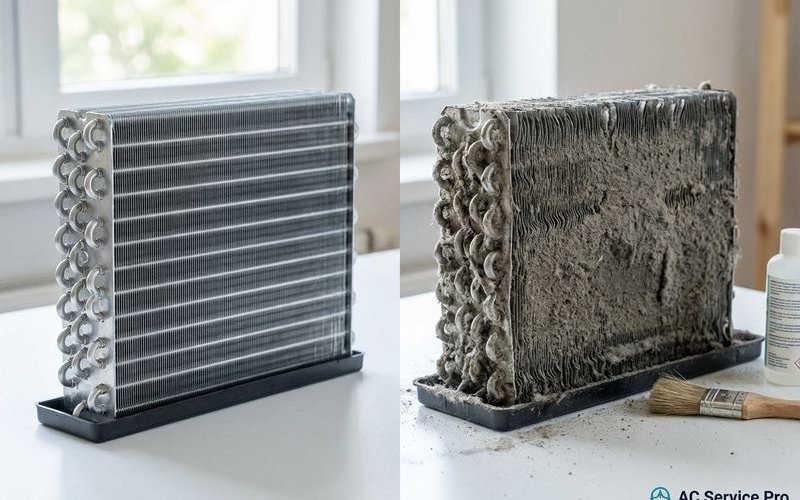
We see this most often in households with young children or elderly parents where the AC rarely shuts off. In these cases, the evaporator coil stays wet constantly. This constant moisture attracts dust and forms a “biofilm” sludge that can block the drainage pipe.
Pro Tip: If you use an inverter unit heavily, check the “Eco” sensor. A dirty sensor often forces the inverter to run at full power unnecessarily, defeating the purpose of buying an energy-saving unit.
Moderate Use (4-8 Hours Daily)
Chemical wash every 6-9 months
This schedule fits most living rooms that are only used in the evenings.
Standard cooling usage allows the unit to dry out partially between cycles. The mold growth is slower here compared to heavy-use bedrooms. We still recommend a general service every 3 months to clean the filters, with the chemical wash happening twice a year.
Light Use (Less than 4 Hours Daily)
Chemical wash every 9-12 months
Guest rooms or prayer rooms often fall into this bracket.
You might think you can skip servicing these units entirely. Please don’t. Dust settles on the internal fan blower even when the unit is off. This forms a “dust cake” that hardens over time. When you finally turn the unit on for a guest, the hardened dust can cause the fan to become unbalanced and noisy.
Factors That Increase Frequency
Pets at Home
Frequency: Every 4-6 months
Cat and dog fur acts differently than regular dust. It bypasses the primary filters and weaves itself into the cooling fins deep inside the unit.
We often find a “felt-like” mat of fur covering the evaporator coil in pet owners’ homes. This blockage suffocates the compressor. If you have furry companions, you cannot wait a full year between washes.
Dusty Environment (Kepong & KL Specifics)
Frequency: Every 4-6 months
Living near major construction projects or busy highways like the MRR2 significantly increases particulate matter in your home.
This fine construction dust turns into cement-like mud when it mixes with the condensation in your AC. It is much harder to clean than normal household dust. If your home is near active development, you need more frequent attention to prevent permanent coil damage.
Cooking Near Aircond
Frequency: Every 3-4 months
Oil mist is the enemy of air conditioners.
If your unit is installed in a dining area or near an open kitchen, airborne grease will coat the coils. This sticky layer traps every speck of dust that passes through. Chemical washing is the only way to cut through this grease buildup; normal water cleaning won’t touch it.
Older Units (5+ Years)
Frequency: Don’t exceed 6 months
Aging units often have degraded insulation and worn seals.
We find that older condensers and blowers struggle to maintain pressure. A dirty coil on an old unit causes a much faster drop in performance compared to a brand new unit. Regular chemical washing is often the only thing keeping these older compressors alive.
Warning Signs You’re Overdue
Don’t wait for the calendar. Your air conditioner will tell you when it is struggling.
1. The “Wind Breathing” Sound
If the airflow sounds like it is fluctuating—strong then weak, then strong again—your blower fan is clogged. The fan blades are likely coated in thick dust, preventing them from grabbing the air properly.
2. The Temperature Gap (Delta T) Test
You can test this yourself. Measure the temperature of the air going into the top of the unit and the air coming out of the bottom. A healthy unit should have a difference of at least 8°C (approx 14°F). If the difference is less than that, the heat exchange is blocked.
3. Water Leaking Inside
This is the classic sign of the “jelly” blockage we mentioned earlier. The drainage pan is overflowing because slime has clogged the outlet pipe.
4. Visible Mold Spots
Look at the directional louvers (the flaps where air comes out). If you see black spots there, the inside of the unit is likely covered in mold.
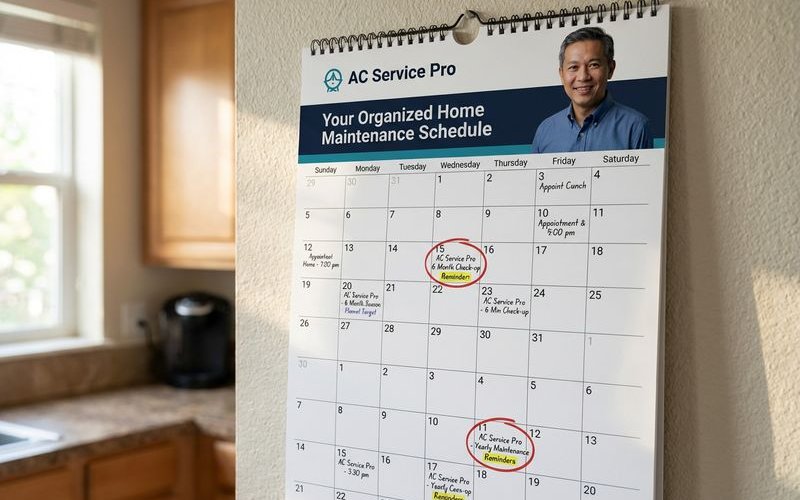
Our Recommended Schedule
For most Kepong and KL homeowners, we suggest this maintenance schedule to balance cost and performance:
| Service Type | Frequency | Why It Matters |
|---|---|---|
| Filter Cleaning (DIY) | Every 2-4 weeks | Maintains basic airflow and prevents dust from reaching internal parts. |
| General Servicing | Every 3-4 months | Cleans the surface dust and checks gas pressure (psi). |
| Chemical Wash | Every 6-12 months | Deep cleans the coil and blower to remove mold and biofilm. |
| Chemical Overhaul | Every 2-3 years | Full dismantling for units that are heavily clogged or smelling bad. |
The Cost of Skipping Chemical Wash
Some people try to save the RM150-RM180 chemical wash fee by delaying service. This is a false economy.
Data from Tenaga Nasional Berhad (TNB) and HVAC studies shows that a dirty unit consumes 15-25% more electricity to provide the same cooling.
Here is the real cost comparison for a standard 1.5HP unit used 8 hours a day:
| Item | Cost of Maintenance | Cost of Neglect |
|---|---|---|
| Annual Service Cost | RM 300 (2 washes) | RM 0 |
| Estimated Annual Bill | RM 1,200 | RM 1,500 (+25% inefficiency) |
| Repair Risk | Low | High (Compressor/PCB Board) |
| Total Yearly Cost | RM 1,500 | RM 1,500 + Repair Risks |
You end up paying the same amount, but the “Neglect” option gives you dirty air, mold risks, and a higher chance of a RM1,800 compressor breakdown.
Book Your Chemical Wash
Not sure when your last chemical wash was? If you have to ask, it is probably time.
Our chemical wash service is thorough and transparent. We include:
- Complete unit dismantling (not just a surface spray).
- Deep alkaline chemical cleaning for coils and blower.
- Anti-bacterial misting to kill mold spores.
- Gas pressure check and top-up (up to 10kg included).
- 30-day workmanship warranty.
WhatsApp us to schedule your chemical wash today!
Need Aircond Service?
20+ years experience. 10,000+ customers served. Free gas top-up with chemical wash.
WhatsApp Us Now