How to Clean Your Aircond Filter: Step-by-Step Guide
Cleaning your AC filter is the easiest way to maintain efficiency. Learn how to do it properly in this simple guide.
How to Clean Your Aircond Filter: Step-by-Step Guide
We know the feeling—you stare at your TNB bill and wonder why it keeps creeping up, even though you haven’t changed your daily routine.
Most homeowners in Kuala Lumpur and Kepong don’t realize that a simple, clogged filter is often the silent culprit behind those rising costs.
Our team at AC Service Pro has seen countless units working overtime simply because they can’t “breathe,” driving electricity usage up by 15% to 25%.
From what we’ve seen in the field, regular standard aircond cleaning is the single most effective way to lower your monthly expenses without sacrificing comfort.
Let’s look at why this happens, the specific “jelly” problem we face in our humid climate, and the exact steps to fix it today.
Why Filter Cleaning Matters (Real Data)
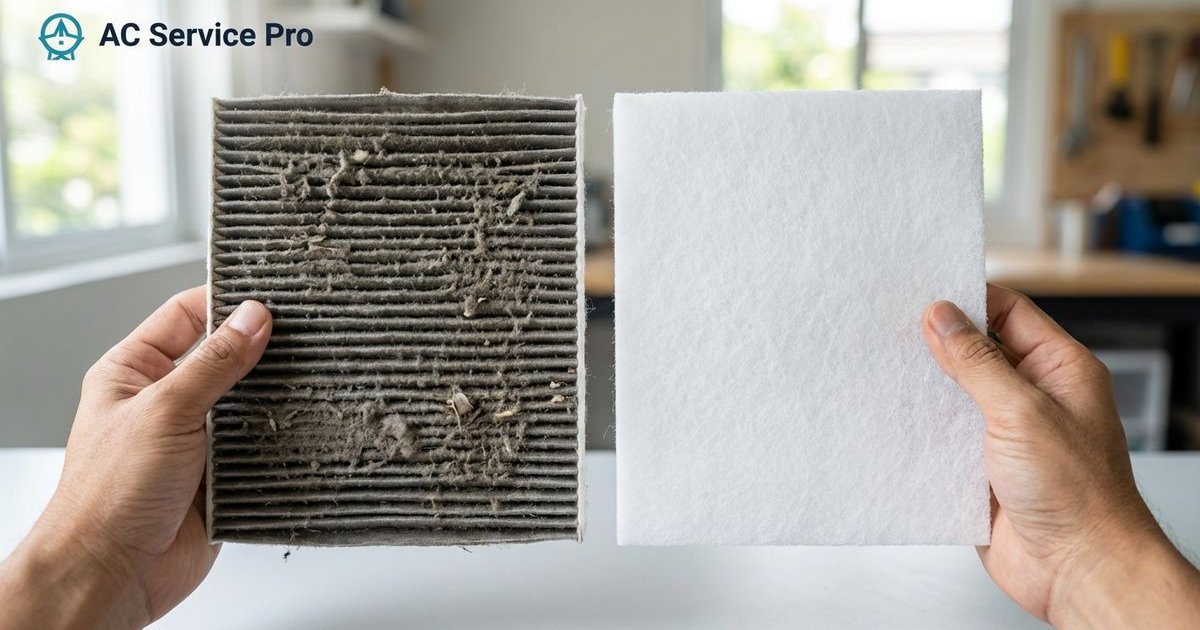
Your filter catches dust, pollen, and the heavy particulate matter common in urban areas like Kepong.
When it’s clogged, the impact is immediate and expensive:
- Airflow is restricted: The fan has to spin faster and longer to move the same amount of air.
- Electricity spikes: A 2025 study on HVAC efficiency indicates that a dirty filter can increase energy consumption by up to 15-25%.
- Cooling drops: The air coming out feels “weak” even at 16°C.
- Biofilm formation: In Malaysia’s 80%+ humidity, dust mixes with moisture to form a “white jelly” or biofilm that can block drainage pipes.
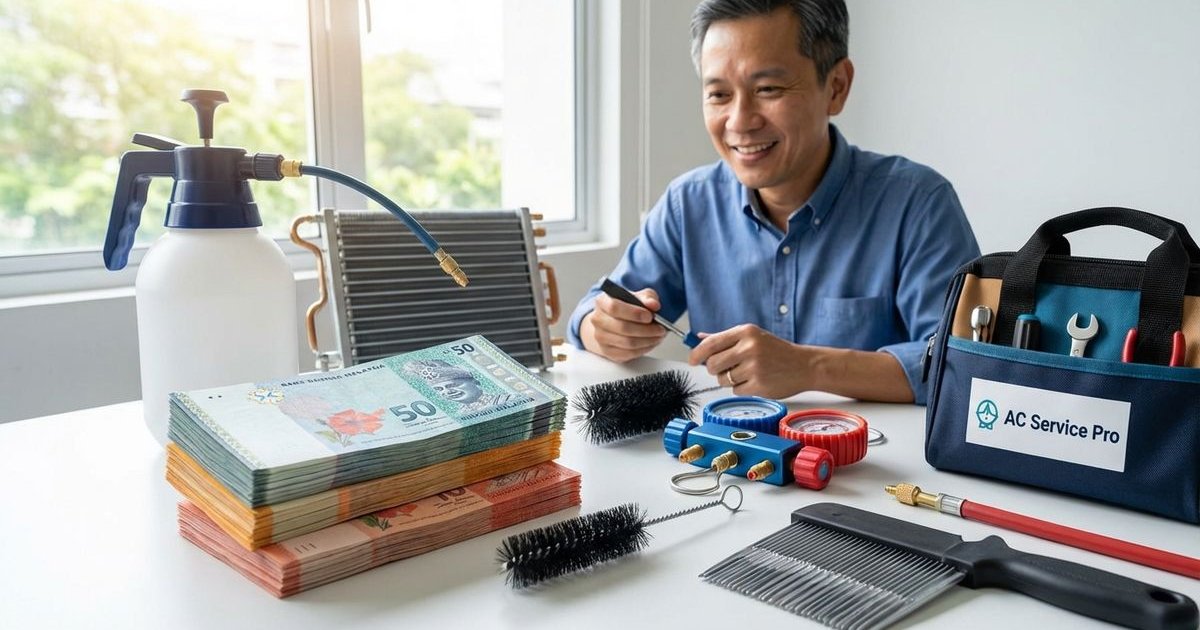
The financial reality: If you are in TNB’s higher tariff tier (paying 57.10 sen/kWh), a dirty 1.5HP aircond running 8 hours a day could be wasting roughly RM30 per month just to push air through dust.
What You’ll Need
You don’t need a heavy toolbox for this.
Our technicians use these simple items for a basic filter service:
- Sturdy Step Stool or Ladder: Essential for the high ceilings found in many terrace houses and condos.
- Mild Dish Soap: Common brands like Glo or Sunlight work perfectly; avoid harsh chemical cleaners.
- Soft Cloth or Sponge: To wipe down the front panel.
- Vacuum with Brush Attachment: Optional, but great for removing the “fuzzy” layer of dust before wetting the filter.
Step-by-Step Filter Cleaning
Step 1: Turn Off the Power Source
Switching off the remote isn’t enough for total safety.
We always advise you to flip the isolator switch—that’s the white switch usually located on the wall next to your unit—to the “OFF” position.
This ensures no electricity is flowing to the unit while you work.
Step 2: Open the Front Panel
Locate the small indentations or tabs on the side of your indoor unit.
For most common Malaysian brands like Panasonic, Daikin, and York:
- Place your hands on both sides of the panel.
- Gently pull toward you and lift upwards.
- Push it up until it locks into the “hold” position (you’ll hear a soft click).
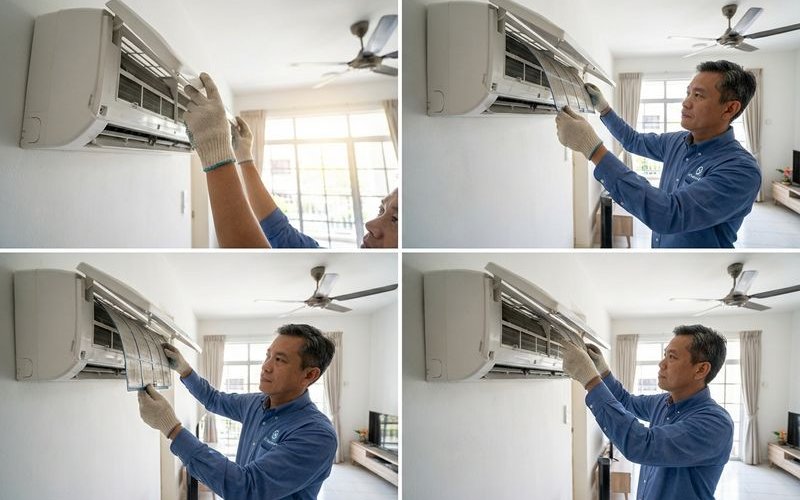
Step 3: Remove the Filters
You will typically see two curved mesh screens covering the cooling coils.
We recommend handling these carefully, as the plastic mesh can become brittle on units older than 5 years:
- Find the small tab at the bottom center of the filter.
- Push the filter slightly up to unlock it from the holding hooks.
- Pull it gently down and towards you to slide it out.
Step 4: Check for “Jelly” and Damage
Before washing, take a close look at the mesh and the unit itself.
If you see a clear, slimy substance (biofilm) or thick black spots on the silver coils behind the filter, a simple filter clean won’t be enough.
This indicates a bacterial buildup that requires a chemical wash.
Step 5: Clean the Filter
For light dry dust:
- Run a vacuum cleaner with a brush attachment over the front of the filter.
- Alternatively, take it outside and gently tap it against a wall.
For sticky or greasy dust (common near kitchens or main roads):
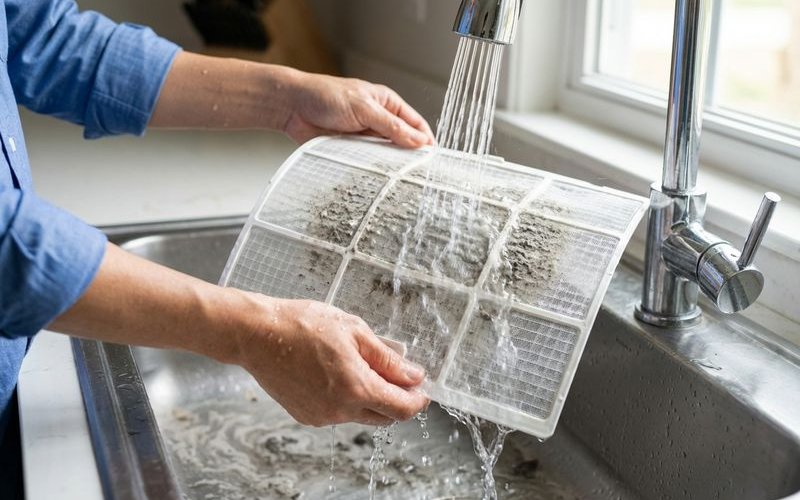
- Take the filters to your bathroom or sink.
- Run cool water through the filter from the back side (opposite to airflow) to push the dust out.
- Mix a drop of dish soap with water and use your hand or a soft sponge to gently wash the mesh.
- Rinse thoroughly until no bubbles remain.
Step 6: Dry the Filter Completely
This is the most critical step for Malaysian homes.
Our humid air means water doesn’t evaporate quickly, and putting a wet filter back in invites mold growth immediately.
Correct Drying Methods:
- Lean them against a wall in a shaded, airy spot (like a balcony or yard).
- Use a fan to speed up the process.
- Pat dry with a microfiber towel.
What to Avoid:
- Never place filters in direct hot sun. The intense UV heat can warp the plastic frame, making it impossible to fit back in.
- Never use a hair dryer on high heat.
Step 7: Reinstall the Filter
Once the mesh is bone dry:
- Slide the filter back into the top tracks.
- Push it up until the bottom tabs click behind the holding hooks.
- Close the front panel and press firmly on the center and sides to lock it.
Step 8: Test the Airflow
Turn the isolator switch back on and start your AC.
You should notice a stronger breeze immediately, meaning the fan is no longer struggling.
How Often Should You Clean?
The “once a month” rule is a good baseline, but local conditions matter.
We have created this schedule based on the air quality conditions we typically see in Kepong and KL:
| Environment | Recommended Frequency | Why? |
|---|---|---|
| Normal Residential | Every 3-4 Weeks | Maintains standard efficiency. |
| Near Main Roads | Every 2 Weeks | Exhaust fumes create sticky, black dust. |
| Active Construction Area | Every 1-2 Weeks | Fine cement dust clogs filters rapidly. |
| Haze Season | Every 1-2 Weeks | High particulate matter blocks airflow fast. |
| Pets (Cats/Dogs) | Every 2 Weeks | Pet hair and dander form a thick mat. |
| Guest Room (Rarely Used) | Every 6-8 Weeks | Dust accumulates even when not in use. |
Pro Tip: Sync your cleaning schedule with your TNB bill arrival date so you never forget.
Common Mistakes to Avoid
❌ Scrubbing with Hard Brushes
The mesh on modern units (especially newer Daikin or Acson models) is very fine. Scrubbing too hard can tear the antibacterial coating or the mesh itself.
❌ Using Hot Water
Hot water causes the thin plastic frame to warp. Once warped, the filter won’t seal the unit, allowing dust to bypass it and clog your internal blower.
❌ Ignoring the Tops of the Unit
Many homeowners clean the filter but forget to wipe the top of the AC unit. Dust settles there and gets sucked right back in the moment you turn the machine on.
When to Replace Instead of Clean
Filters are durable, but they aren’t permanent.
We suggest buying a replacement if you notice:
- Tears or holes: Even a small hole lets dust coat your cooling coils.
- Permanent sagging: The mesh no longer stays tight in the frame.
- Unremovable mold: Dark spots that won’t scrub off even with soap.
Replacement filters for standard wall units usually cost between RM30 to RM60 at local hardware stores or online marketplaces like Shopee/Lazada.
DIY Cleaning vs. Professional Chemical Wash
Cleaning the filter is maintenance; chemical washing is restoration.
If your filter is clean but the air still smells musty or isn’t cold, you likely need a professional deep clean.
| Feature | DIY Filter Cleaning | Professional Chemical Wash |
|---|---|---|
| Cost | Free | RM 120 - RM 180 (Avg. for 1.0-1.5HP) |
| What Gets Cleaned | Front mesh filters only | Filters, cooling coils, blower wheel, drainage pan |
| Removes Biofilm? | No | Yes (kills bacteria and mold) |
| Improves Airflow? | Yes, slightly | Yes, significantly (restores factory performance) |
| Frequency | Monthly | Every 12-18 months |
Make It a Habit
The hardest part is simply remembering to do it.
We recommend setting a recurring reminder on your phone for the first Sunday of every month.
Taking 10 minutes to wash your filters is the easiest tax-free “income” you can earn—saving you RM30+ monthly on wasted electricity.
Need Professional Help?
If you’ve cleaned your filters and your AC still isn’t cold, or if you see water dripping from the unit, the blockage is likely deep inside the drainage system.
Contact AC Service Pro for a professional inspection and chemical wash to get your unit running like new again.
Need Aircond Service?
20+ years experience. 10,000+ customers served. Free gas top-up with chemical wash.
WhatsApp Us Now