Understanding Aircond Gas
Your aircond uses refrigerant gas (commonly called “gas”) to transfer heat and cool your room. The gas circulates through the system, absorbing heat from indoor air and releasing it outside.
In a properly sealed system, gas levels should remain constant for years. However, small leaks can develop over time, causing gas to slowly escape and reducing cooling performance.
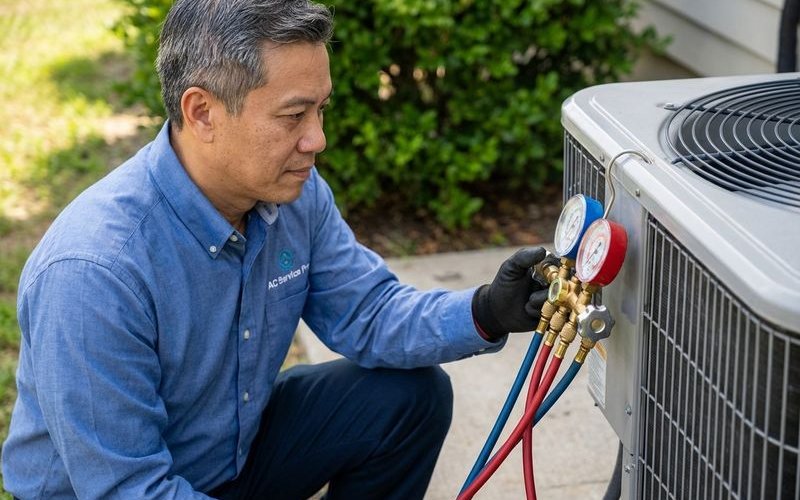
Signs Your Aircond Needs Gas
- Reduced cooling: Aircond runs but room doesn’t get as cold as before
- Ice formation: Ice building up on copper pipes or evaporator coil
- Longer run times: Aircond runs longer to achieve the same temperature
- Higher electricity bills: Working harder means using more power
- Hissing sounds: Could indicate a gas leak
Gas Types Explained
| Gas Type | Era | Environmental Impact | Notes |
|---|---|---|---|
| R22 | Pre-2010 | Being phased out | Older units only |
| R410A | 2010-2020 | Moderate | Most common type |
| R32 | 2020+ | Low (eco-friendly) | Newer units |
Important: You cannot mix gas types. Check your unit’s label for the correct refrigerant type, or we can identify it during service.
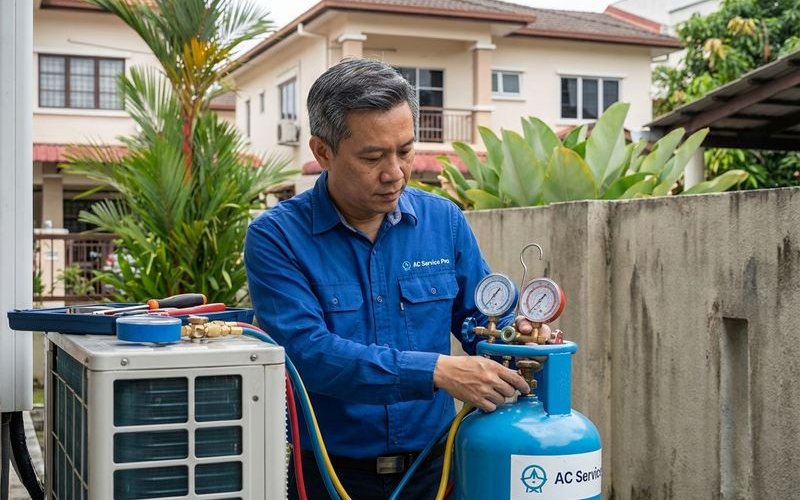
Why We Check for Leaks First
Simply topping up gas without checking for leaks is like filling a bucket with a hole. The gas will eventually escape again, and you’ll be back where you started.
Our technicians perform a basic leak inspection before topping up. If we find a significant leak, we’ll advise on repair options before adding gas.